Finding Focus And *Actually* Taking A Moment For You

Life is hectic. Fact.

You will have heard to cliches of “take some time for you”, “have you tried meditation” and “you just need to relax”, but in reality, how do you actually do this?

Well I wanted to take a bit of time to teach you about a skill called One Mindfulness. One Mindfulness is all about focusing on one activity at on time, and one sense within that one activity. You may believe you already do this, but in reality when we are doing any activity these days, we have been trained to multi-task, to make the best use of our time, and to be as efficient as possible. For example, if you are watching TV, are you playing on your phone at the same time? If you are waiting for the kettle to boil, are you doing the washing up whilst you wait? Or if you are having a bath or a shower, are you making a list in your head of all the things you need to do?

Stop. Stop multi-tasking. Stop ruminating. Stop avoiding the moment.

Instead, next time you make a cup of tea, take the moment to focus on what you are doing. take a moment to go through each sense one at a time and really focus on the activity.

What can you touch? Can you feel the cold surface of the mug, can you feel the grainy texture of the teabag, does it feel cold or hot, does it feel smooth or bumpy, and how does your hand feel on the surface?

What can you hear? Can you hear the water boiling? What does it sound like, can you hear the layers of sound? Can you hear other things, can you hear cars outside, people talking, birds nearby, or can you just hear your breathing? or the movement of your clothes as you move around?

What can you see? Can you see the steam starting to come from the kettle? Can you see the colour of the mug? try and name the colour, you don’t need to be simple with it, not just red or blue, instead try and focus on the shadows you can see within the colours, the darkness or the tones of each colour? Can you see anything else in the room? Can you see the surface around the mug, can you see the shadows on that surface, or maybe a tiny bit of detailing on the surface that you have never noticed before?

What can you smell? Can you smell the teabag? What does it smell like? Can you smell the hot water? May sound strange, but does the boiling water have a different smell to cold water, the answer may be no, but take the time to consider to focus and to think of that smell. How does that smell make you feel?

And finally, what can you taste? Is your mouth dry, or maybe it is watering at the thought of the cup of tea. Maybe it is the morning and you haven’t brushed your teeth yet, what does that taste like? Can you taste something you have just eaten? Or maybe you can taste the smell of the teabag?

This simple activity of making a cup of tea has just become a small moment of meditation using the One Mindfulness technique. Through focusing on all of these senses, you have hopefully removed yourself from the stress of life for 5 mins, you should have been able to stop thinking, relax your mind, and really live in the moment in the most wholesome sense of the word. Thoughts may come and go as you go through this process, that is totally fine, just let them flow through. Often when we try and relax or meditate, we give up when we start thinking of other things, as if that thought has taken over and made us fail at the meditation. Instead imagine the thoughts flowing through an open window, they can come in and they can go out, but they do not blow down the house just by being there. Acknowledge the thought, and then return to the senses.

This blog is a little different to my usual, but I hope this little bit of practical advice can help you take a moment for you. And do feel free to let me know how it goes!

Happy Mindfulness!

When do our feelings reflect real emotions, and when are they misdirected into making a bad moment, a bad day?

All emotions are justified, lets just start there. If you are feeling something, you are allowed to feel it, you are allowed to express it, and you are allowed to seek an understanding of why you feeling it. But sometimes, when we feel, we can react in a way that later may seem exaggerated, or like an “over-reaction”. Is that because the emotion you thought you were feeling in that moment was not the correct emotion for the situation?

Lets look at it this way, you walk out the front door in the morning, you have freshly washed hair and brand new shoes. You are running a little late, and in your haste have forgotten your umbrella. As you leave, it starts to rain, you don’t have time to go back for your umbrella. In your frustration, you are not looking where you are going, and you step in some dog muck. New shoes ruined. Hair ruined. and with all the stress, you miss the train you were racing for. What emotion are you feeling?

We have so many reactions to different emotions, but understanding the core emotion is the most important thing. If we look at Marsha M. Lineham’s work, we can divide our emotions into ten different core emotion categories: Happiness, Fear, Anger, Disgust, Envy, Jealousy, Love, Sadness, Shame, and Guilt. All our reactions or secondary emotions can be separated into these categories, but understanding which category it goes into is really important in how we understand and process that emotion, which will ultimately help us move forward, and not get hung up on feeling potentially the wrong thing.

So, lets return to our scenario. Instant reaction I would have would be probably to cry. But why? What emotion am I feeling? Anger? Sadness? Shame? Disgust? Maybe a mixture of a few emotions, but what is my primary emotion? In being able to identify this emotion, we can identify a reasonable way to react to it, or we can ask ourselves, is our instant reaction, the correct one? So is my instant reaction of crying right for that situation?

Lets imagine a child falling down, the child is shocked, he cries. Why? Because they are expecting to feel pain, or because they are shocked? Because they have actually hurt themselves and are injured? Or because they are upset or embarrassed? A child falling down can help you understand core emotions, and the correct reactions. When we pick up a child after falling down, what do we ask them? We ask them, are you hurt? Where hurts? More often than not, it is an imaginary pain that they cannot understand, so a magic kiss will always make it better. Can adult emotions be fixed as easily? Can we take a moment to ask ourselves, are you hurt? Where hurts? And what is the magic kiss we need in that unique situation.

So, What hurts in my awful morning scenario? am I physically hurt? No. Am I emotionally hurt? Maybe a little, but why? Is it my pride that is hurt? Potentially yes. So what core emotion is connected to pride and embarrassment? That would be shame. So what we are really feeling in that moment is (potentially) shame. Once we understand that, we can try and push the other emotions of anger or sadness away, because they may not make sense or be justifiable in that situation. And instead we can seek to understand how to make ourselves feel better from that context of the primary emotion of shame, whilst not loosing ourselves in other emotions. Will crying help? unlikely. Will it make us feel better? Maybe. Is there a better way to feel better? Probably. What is that? Well that is something only you can answer. (For me, always start with a cup of tea!)

Understanding emotions can help us see the woods through the trees, it can help us process what we are really feeling, and it can help us understand what our instant emotional reaction may be, and whether that is appropriate for every situation. It may take some reflection, and it may take some practice. But if we are able to start understanding the appropriate emotion, and then subsequent reaction to each situation, we can then handle ourselves in a much more emotional regulated and calm way.

Remember, a day can always get better, do not let your emotions overwhelm you. Process, react, move forward! Do not let a bad morning set the trajectory of your whole day! To work on more skills around emotional regulation, and how you can improve your wellbeing, get in touch to arrange a coaching Chemistry Call now!

“Your Wealth is your Health”

So, as some people may have noticed, I have been a little quiet on here over the past month and a bit. The reason? Well after 15months of avoiding Covid, it finally got me. Boo!

Having caught Covid with a small group of friends, all 8 of us contracted the illness, and between us we suffered the full spectrum of symptoms. From the normal flu like symptoms, to extreme fatigue, loss of smell and taste, bad tummies, covid brain (mistaking strawberries for tomatoes…), and the horrible aches and pains that literally keep you up at night. This is a group of healthy, 29/30 year olds, two of whom had had both the vaccines. That is the power of Covid.

For the first week or so, it seemed like I had it to the same degree as the others, maybe a couple of days behind symptoms-wise, but following the same route. However on day 7 from when we first developed symptoms, whilst everyone else appeared to be starting to feel better, I went downhill. I actually had a job interview that morning, and managed to mumble my way through over the zoom call, every now and again realising my head had actually slipped below the camera frame. After the call, I was shaking, I felt so nauseous that I could barely move my head, and I just slept. That was the Thursday, and from Thursday until Sunday I was unable to eat or drink a single thing, not just because I couldn’t smell or taste it (Which is highly frustrating, especially when my mum bought us my fave fish and chips as a post interview treat), but it wouldn’t stay down. By the Saturday evening I was severely dehydrated, and was having kidney pain, which initially we thought was a kidney infection, but turned out to just be Covid.

At 4am on Sunday morning, I asked my mum to call 111, and I am so glad I did. They got me into hospital for a Covid Appointment at 8am. I could barely walk to the car, I was so weak. And the car journey made my pain in my side and nausea 1000 times worse. I apparently even said the words, “I just want to die”, and reflecting on this, although a little dramatic (ok quite a lot dramatic), I can understand why. I felt the worst I had ever felt in my whole life.

As soon as I saw the doctor, he told me I had a fever of 38.9. High, right? During my stay in hospital, this would go up to 42.1! I was actually diagnosed with Covid Pneumonia, meaning it was visible all over my lungs through an x-ray and CT scan. I had felt dramatic for going to hospital, but when the doctor said I think it is time to admit you, I was shocked! I don’t think, even with how bad I felt, I realised how unwell I was. My mother and I then sat in a room for the next 12 hours, waiting for them to work out what to do with me, as they only had one Covid patient in the hospital and therefore had closed down the wards. During this time, there was a whole adventure of trying to find a vein in my crappy arms, and also some anti nausea medicine that apparently made me start tripping and rambling complete nonsense. Eventually, I was shown to a little corner of the hospital, where I was given my own room, and only one nurse per shift was allowed to come into the room, to try and limit the spread. the other Covid patient was in the room next door to me, and was about 50 years older than I am. Sadly whilst I was there, a third patient was admitted, and was put on a ventilator. Because of being in separate rooms, I could not see this happening, thankfully, but the panic and upset in the doctors and nurses was obvious, as they could sense Covid gradually starting again.

I was in hospital for 3.5 days, and with the help of LOTS of fluids, steroids, blood thinners, oxygen, antibiotics, anti nausea medicine (my saviour!), potassium, and a few other things, I was able to go home and recover in my own bed (well my bed, at my mums, having caught Covid 4 hours away from London). Although I felt rough, and incredibly weak, I was ok. I was able to eat (toast, lots of toast), and even better, drink again! I was so scared I would be sick every time I had a sip of water, but gradually building up that confidence again and realising how much better I felt when I was hydrated was amazing!

So, why am I being so open about all of this. Well, during my time in hospital, my mum kept saying a phrase to me, “your health is your wealth”. This is something she and my grandma have said my entire life, but I have never really thought about before. Of course, I understand it and I agree with the statement. But whilst I was in hospital, I felt like my knees and legs were being drilled into (Covid aches and pains), I felt so unwell I couldn’t eat or drink, and I actually couldn’t keep anything down if I had felt able to. I felt so unwell I couldn’t walk to the toilet without help, and when I would get back into bed, I would just sleep because 5 steps had taken it out of me. And I sat there, and reflected on this, and how without our health, we have very little.

Now this is not to say that for those people who have long term medical issues, physical or mental, cannot live a fulfilled life or a good, wealthy life. But it just makes our starting point that little bit harder. We come into this world, each unique and beautiful, and each with our own limitations. We learn to live with this, and adapt to this. But if you neglect your health, you loose so much more than if you have no money or physical possessions. Without your health, you are vulnerable, you have pain, you have struggle. Your health is the most important thing you have, and thing you can give or help another human being protect. Furthermore, similar to money, it can take moments to ruin your health, and years to rebuild what you had. It is so much harder to strengthen and protect yourself without your health in tact.

So why did Covid make me think of this, well because it scared me. It scared me to see how something I cannot see and had been so careful about could affect me, a healthy 29 year old. It made me realise that in this world, we are only here for a short amount of time, and in that time we have to live the best life we can, as I have said many times before, “a life worth living”. and to do this I need my health to be the best it can be, both mentally and physically. Without this, we are limited, we are held back. We need out health to have the strength, the energy, the power to keep going, and the better the health the easier certain things are.

So, I wanted to share this with you, not as a horror story, because things could have been so much worse, but as an opportunity. This is your opportunity to reflect on your health, physical, mental, emotional, and consider how wealthy you really are? And what can you do to look after yourself and build that health wealth further. Covid has been a time of great sorrow and losses, and I shall never forget seeing the nurses going in to treat the man in the room next to me, because it really was heartbreaking, but we can now make it a time for us to reflect and grow, and become stronger than we were before. As these variants take hold, lets adapt ourselves as well, lets grow as well, and show Covid that we have more resources that it ever will do.

And if you need any help in this reflection or a growth plan, you know where to find me…. 🙂

Stay safe everyone, we are almost there! And remember, you have so much, if you have your health.

How do we return to the old, when the new just became our normal?

They are having a hard time surviving the peace, after they survived the war

Loung Ung, Cambodian-American Activist

We made it through a pandemic, well done us!

It has been a long, hard year, and for many of us, it has really made us reflect on what is important to us, what makes us tick, and what makes us shine. It has been a year where we have reflected, where we have moaned, fought, laughed (ironically and not so ironically), where we have rested, clapped, and for many of us developed a new normal. So many people I know have developed new coping mechanisms in order to survive the past year, and for many it has been about looking internally, and making their world a little smaller. That doesn’t mean smaller, in the sense of importance, it means smaller in the sense of pace and scale. Instead of running on the hamster wheel of life, we have found more time for our family, and for ourselves. Instead of working 12 hours days, and then networking or socialising, we have found ways to switch off, to separate home and work, and also to prioritise what makes us happy, but also who is necessary for that that happiness within our lives.

When we struggle, we often close ourselves to the outside, and so often a way out of a depression or an state of anxiety is to talk about it, to speak to people, and share your feelings. For some people this comes naturally, for others it is much harder, as they are internal reflectors, or they find sharing that vulnerability scary. During this pandemic, how often have you reached out to someone close to you and said, “this is hard”. or “I am struggling”. Have you found that you have done this more or less that normal? From speaking to people in my life, I have found people have been able to express this more freely, they have been more vulnerable, and they have been more open about their fears or their struggles. Why is this?

On reflection I think this is about a shared experience of hardship. We have all experienced a similar change to the normal life we live in. We all have an understanding of what this pandemic has done to our normal. It has, in many ways, allowed us to be more open with our friends and family, because we haven’t had to explain why we are finding it hard, because everyone is finding it hard.

So, to the present day. Excitement, joy, hope, planning. These are all things occurring right now! The world is gradually opening up, and you only have to glance at social media to see picnics, brunches, pub gardens and the rest. So why is it that so many people are struggling with anxiety more than ever now, when what we have all been wanting for the past year or so, is finally coming to fruition?

We, as humans, are creatures of habit. And over the past year, we have finally found our routine, or step in time. We have found an ability to make time for each other, to feel less pressured about FOMO, or about filling a diary. That pressure has been removed by a greater being, not by ourselves, and that removal of choice has taken the responsibility away from us. If we break down that word, responsibility, what do we get? The ability to respond. being ABLE to respond. We, for the past year, have not been able to respond to that pressure, and therefore if you are unable to do something, you remove it as a worry. For example, I am not able to fly, it would be delightful, but it is not possible, so my response to that ability is gone. I do not even need to think of a response. If you are able, so for example I am able to get on a plane, and visit family, but my response to that ability is nerves or fear, because of an underlying anxiety, then my response to that ability may be worry or pressure. For the past year, because our ability has been removed, our response, even though we may have shared frustration, has been to create a new normal, and new habits. So why does that lead to anxiety now?

As we come out of lockdown, we now have the ability to see people, to make plans, even to potentially look to the future, and re-fill that diary that has laid empty for the past year. With that ability, we have now got to respond. And with that responsibility, comes pressure. But when we have spent the past year creating a new normal, are we ready to return to our old lives? are we ready to re-establish that hamster wheel, and give in to the pressure of the world around us, as it was.

For many people, this responsibility is leading to anxiety, so how do we overcome this anxiety? Well, we change the response!

Instead of letting ourselves feel that pressure, we need to give ourselves time, we need to understand that we are still going through a shared experience, so we can still voice our concerns. You can still say to people “this is hard.” or “I am struggling.”, and I bet you will be surprised how many people will agree. Rather than give into the pressure of living how we used to, lets take some learnings from the past year and bring them into our normal now. Just because we are returning to life as we may have known it, does not mean we have to bring that responsibility and pressure of the past. Instead, lets treat this as an opportunity to create a new, new normal, with learnings from the old AND the pandemic. Give yourself permission to live life how you want, with the freedoms of now, but with the learnings of the past year.

Stay Safe!

Time to Bust Those Coaching Myths…

In a growth mindset, challenges are exciting rather than threatening. So rather than thinking, oh, I’m going to reveal my weaknesses, you say, wow, here’s a chance to grow.

Carol Dweck
Author of Mindset: The Psychology of Success.

As I was starting my coaching busines, I received lots of messages of support and enthusiasm from those around me, however when I asked them if they would receive coaching themselves, the common response was “I don’t know what it is…” or “I don’t need coaching”, or “I don’t understand the point in coaching”. When I explored this a bit further with a wider group, I realised this misunderstanding or lack of any understanding of coaching was pretty common, and therefore I wanted to do a bit of a myth buster on the common misconceptions of coaching… 

“Coaching is a lesser version of counselling” 

This is probably one of the most common responses I have received, why would someone get a coach, when they could pay the same (or less than some coaches) for a fully trained therapist or counsellor. Well the answer is simple – Coaching is not counselling! This is something I make really clear in all my sessions, as it is such an important element to understand. Coaching is a future focused tool, to help create an action plan for your development, through really seeking to understand yourself. Coaches may ask questions that explore some elements of the past; however this will be purely to inform the future, and help you move forward. They are not there to help you fix the past or support potential mental health conditions. As someone who has had various forms of therapy AND coaching, it is so important that you see the right person for the right solution. Coaches have different training to therapists and doctors, because they use different tools, and they are there for a different purpose. It is just as important to ensure you are seeking the right type of support for you, so if you are looking for support with your mental health due to health issues or recurring problems, please speak to a medical professional. However, if you are looking to improve your wellbeing, set goals, and achieve a life you really are thriving in, speak to a coach! Both highly skilled, but in very different ways. 

“Coaching is all just fluffy nonsense with no substance”

Any coach worth their salt should have undertaken at least one certification or qualification. They should have the basics in training principles, mentoring and coaching best practices, have read research on studies by coaching theorists. I myself took some time off work for a few months to really focus on my learning and development around coaching, to work with study groups, and even to write an academic essay (bit of a shock to the system after ten years out of uni!) I invested in my personal learning around psychometric tests, which I then tested on friends and family at a personal cost to myself. I read books on positive psychology and wellbeing coaching theory. I explored different coaching points of views and tools, for example NLP, something I find so interesting, but some coaches disregard. And when I actually coach my clients, I use these frameworks, I use my technical knowledge and understanding. If after a session, I feel I need to know more on a certain framework or find a different tool and technique, I continue to educate myself. Yes, I am offering a space for my clients to explore their thoughts and feelings, but that is not fluffy, that is what makes you who you are! And with the support of my technical knowledge, tools and techniques, the sessions definitely are filled with substance! 

“Coaching is just for the privileged”

This is a personal pet peeve of mine, that quite a lot of coaches out there are targeting a certain demographic, through living an aspirational lifestyle. I feel that this can sometimes leave people feeling a bit disengaged with coaching and see it as something beyond their reach or a bit preachy. The truth is coaching can benefit everyone, and it is one of the reasons I deliberately offer packages and price points that are accessible to those just starting their career, and do not have a lot of disposable income! I remember what it was like to be a student, applying for jobs, scatter-gunning applications without focus. I remember the feeling of frustration and rejection, that would then flow into my personal life. Was I living my best life? No, it was bloody miserable and really hard! If I had had a coach when I was leaving uni, or even when I was considering uni, would I have taken the path I took? Maybe not. Maybe I would have been able to understand my goals and values a bit better and create better objectives and a clearer plan. So no, coaching is not just for the privileged, coaching can benefit anyone, anyone looking to create a more fulfilling life, for them, with their resources, at this moment in time. 

“Coaches should have loads of life experience”

One response I have been challenged with as a coach is that I am too young. “What could you know about the world and life”. However, coaches do not have to be old, and personally successful in a similar area to yourself. If you are looking for someone who has had a career you aspire to, or a personal life you aspire to, to discuss and learn from, that is a mentor, not a coach! And it is possible to have both! Coaches are trained to help you understand that you are the expert in you, and we are here to be a safe enabler of your goals. Sometimes it may help to have a coach who has a similar background to yourself, or with career coaching in particular, has some helpful shared experiences. But it is not a compulsory element for your coach. My ability to coach and bring out the best in you, and help you understand yourself, is not defined by my past and my values. As long as you feel comfortable with your coach, and they have the right training and experience that lets you feel open and trusting of them, that is all you need. 

“Coaches will solve all your problems”

I will level with you, being coached is not always easy. Coaches are there to challenge you, to push you, and to question you. We make our clients think about things they maybe have not thought of for a long time, or challenge them on why they have done something, or often, not done something. This is all aimed to help the client really start to understand themselves. However, coaches can only take this so far, we are not here to solve all your problems and give you the answers. Why? Because only you are the expert on you! So, in the words of the old proverb, we will lead you to the water, we will support you all the way there, but you are the only who has to drink the water, who has to accept where change needs to happen and to acknowledge how you can start to take those steps towards growth. We can give you all the tools in the world, but you have to be the ones to actually use them. 

“Coaches are only helpful when there is a potential challenge”

So of course, when you are at a crossroads in your life, maybe with a job, or with a personal circumstance change, getting a coach can be super helpful, to support you in understanding what you want from that next step, or how to make that next step a successful one. But that is not the only time that coaches can be helpful. Sometimes, when you are feeling most comfortable in your life, that can be a great time to really understand what you want from your life, and what you could be improving or developing on. Having that personal headspace to ask yourself the question, supported by a coach, “what do I really want from my time of this earth?” can be liberating and enlightening. This is why I personally found all my coaching on wellbeing principles, because wellbeing is something that can never be completed, it is an ongoing process. So, even when you are feeling really positive and happy in your life, there are always elements of personal development or growth you can achieve. So, no, coaching is not just for the challenging times, it can be for the times of reflection as well. 

“Coaching is just for those in a professional environment “

I have to admit, originally this was something I thought. However, that was because my previous experience of coaching had always been in a work setting. I had had coaching when seeking promotion, or when looking to apply for a challenging new job, in my case on a highly competitive graduate programme. I had been a coach for more junior colleagues and supported them on their work aspirations and goals. Career coaching is invaluable to anyone looking to really thrive in their chosen job or understand if they are in the right job for them. But coaching is not just for the professional side of our lives. I offer life coaching and wellbeing coaching as well. These elements are about challenging the personal side of your life, and where you are, to understand where you wish to be. This can be really helpful if you are looking to achieve a particular goal, for example, losing weight, or finding more joy. I use principles found in positive psychology to understand what makes you as a person joyful or in flow. I seek to understand your personal drivers, and intrinsic and extrinsic motivators. Take the example of losing weight, it’s one of the most common goals we have as a nation. However, have you asked yourself why YOU want to lose weight. Not because you have to, not because someone has told you to, but why is this something that you personally want, for yourself? This is the sort of challenge I would help you explore in life and wellbeing coaching, as if we are able to understand these elements, we are so much more likely to succeed. So coaching is great in a professional environment, but it is also great in the personal side of your life as well. 

These are just a few myth-busters, but I am sure there are so many more, drop me an email or a message with any thoughts, questions or even misconceptions on coaching you may have, and I shall do my very best to support you! 

Self-Indulgence Vs. Self-Investment

Since starting coaching, I have heard various people say things like, coaching is self-indulgent, it is nasal-gazing, and even it is vain…

In life, we move at high speed all the time, and rarely take the time to sit and reflect on what we have learnt or taken from an individual experience or interaction. Why is this? Because we are too busy? Because it is unnecessary? I would argue that we are never too busy to reflect on life, and that reflection is so much more useful to us that we actually realise.

Think of about how we learn…

Studies have shown that at the end of every learning session, formal or informal, if we take the time to reflect and summarise what we have learnt in that session, our learnings are more likely to stay with us for longer. If you take this one step further, you could even look at the work pioneered by David Kolb, around the “Experiential Learning Cycle”, which reflects the way adults learn. Kolb found that there are 4 steps to lasting learning, and although we may naturally prefer one of the steps, in order for a learning to remain with us, we must ensure the whole cycle is completed. Those steps are, “Experiencing” the situation, “Processing” by observing the reacting or observing what has happened, “Generalising” through understanding the truths of that experience vs your previous experience or others experiences, and finally “Applying” your new understanding from these observed trends to new experiences, modifying old behaviours or practicing new skills.

So, what does this have to do with coaching being self-indulgent? Well, I see self-indulgence as something that feels good, but is not necessarily good for you. Self-indulgence is “excessive or unrestrained gratification of one’s own appetites, desires, or whims”. Self-Indulgence is staring in a mirror too long, eating one two many pieces of chocolate cake, talking about yourself all the time, and never asking how others are. Self-indulgence is vanity, selfishness, and potentially even a lack of awareness. That is not coaching.

In order for coaching to be successful, yes we must look at ourselves, and take the time to understand ourselves, but that is not easy, and it is definitely not self-indulgent. It is instead, self-investment. It is about taking the learning cycle, and applying it to not just the technical or practical skills we learn, but instead using that cycle to understand how we can develop and improve as a person in order to meet our goals, and fulfil our values. Self-investment is a positive step to improve who you are and how you live your life. Think of your home, your kitchen may be functional, but is it meeting its full potential? Can you use that space better? If you understand the limitations of that space, and the requirements of your family, are you able to create something more valuable for you and those around you? Yes you can, and how do you do this? Self-investment. Understanding the space, your resources, your limitations, your needs for your kitchen, are the same as understanding your own personal values, your own goals, creating your own action plan to develop and grow, and self-investment in yourself can be achieved through coaching.

Self-investment is not vain, it is not nasal gazing, and it is definitely not self-indulgent. Self-investment through coaching is necessary for all of us, to help understand our full potential and how we really make the most of this life we have been given. So make time for you, because you are never too busy to improve, and invest a little in yourself.

New Year, Same You.

Happy New Year! New Year brings with it a sense of hope, joy, freshness, and excitement. Celebrated all over the world, it is a time where people look forward, whilst also reflecting on the past, and through this marking of time, people are united by the future.

However, New Year can also be a time when people make big promises to themselves, and to others. How many people have asked you, “whats your resolution for 2021?”, or have said to themselves, “this is the year I lose weight/go to the gym/drink less/eat more broccoli” (insert new year stereotype here…). Within themselves, New Years resolutions are not a bad thing, they give up an opportunity too reflect on what we want from the future, and what our goals or hopes are. However, what is key to the success of a resolution is that is it realistic. Yes is it a new year, but it is still the same you, and that is ok!

As with all goals it is so important to ensure that they are realistic and achievable. Think of it this way… If you do not like broccoli, don’t promise yourself you are going to eat more of it, as you are instantly setting yourself up to fail. This logic should be followed with all resolutions and goals, for example a great resolution is of course to get healthier, whether that is eating more veg or doing more exercise. But make it applicable to you, rather than to who you think you are or who you want the world to think you are. If you hate the gym, don’t promise you are going to go five days a week, because you just won’t, and that will lead to feelings of failure or guilt. Instead work your way up to a goal in a way that is more suitable to you, such as I will go for a walk with my friends 5 days a week, and ensure you walk over 10,000 steps a day. If you have gone from sitting around all Christmas doing nothing, then this is a more achievable goal to meet, and you can then progress this to maybe making one of those walks a run, or a bike ride, meaning you are meeting your goals but through baby steps.

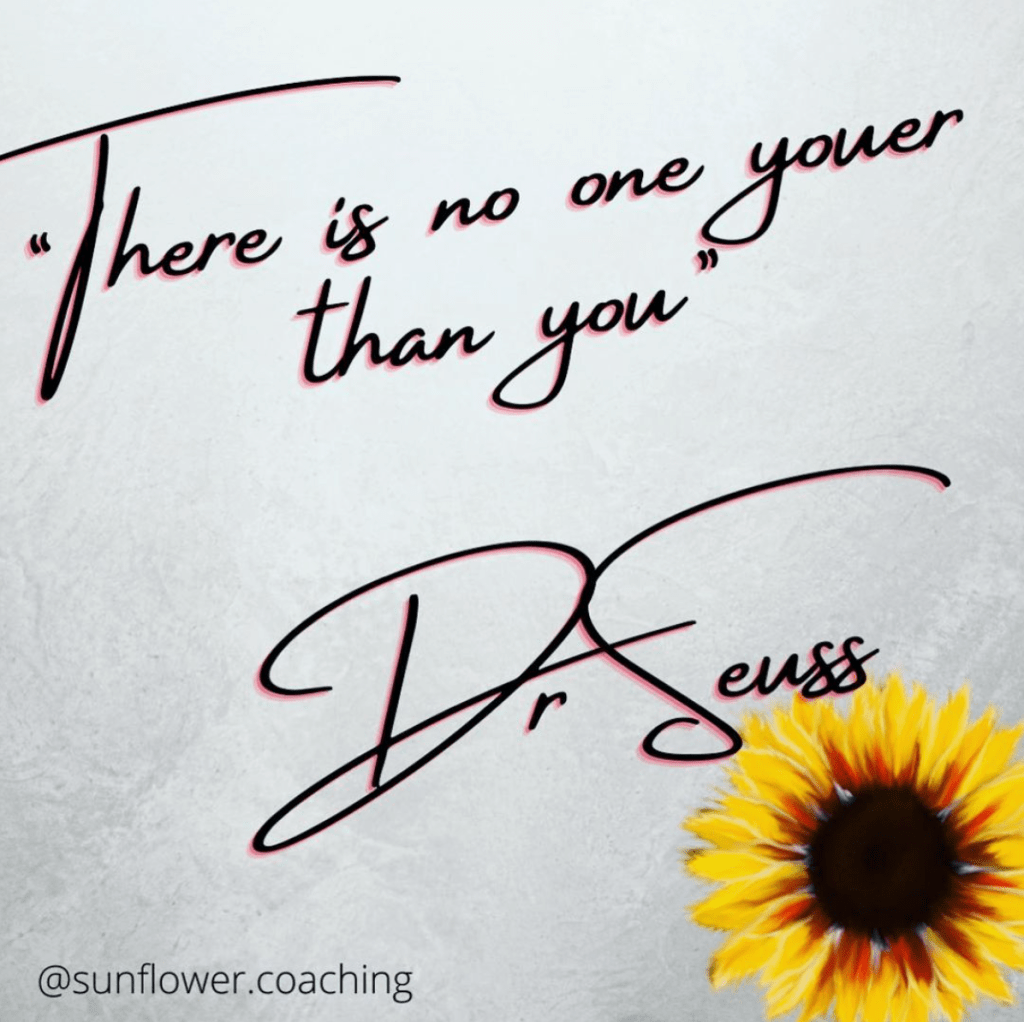
The key here is to recognise who you are. Everyone is different and it is in those differences we find our sense of self, and that is beautiful. In the words of Dr Seuss, “There is no one youer than you.” So whatever your goals are for this year, or for this week, make sure they are YOUR goals, designed for what YOU what and what YOU can do. And remember, not achieving something today, does not stop you from trying to achieve it tomorrow.

Happy new year to YOU!