Finding Focus And *Actually* Taking A Moment For You

Life is hectic. Fact.

You will have heard to cliches of “take some time for you”, “have you tried meditation” and “you just need to relax”, but in reality, how do you actually do this?

Well I wanted to take a bit of time to teach you about a skill called One Mindfulness. One Mindfulness is all about focusing on one activity at on time, and one sense within that one activity. You may believe you already do this, but in reality when we are doing any activity these days, we have been trained to multi-task, to make the best use of our time, and to be as efficient as possible. For example, if you are watching TV, are you playing on your phone at the same time? If you are waiting for the kettle to boil, are you doing the washing up whilst you wait? Or if you are having a bath or a shower, are you making a list in your head of all the things you need to do?

Stop. Stop multi-tasking. Stop ruminating. Stop avoiding the moment.

Instead, next time you make a cup of tea, take the moment to focus on what you are doing. take a moment to go through each sense one at a time and really focus on the activity.

What can you touch? Can you feel the cold surface of the mug, can you feel the grainy texture of the teabag, does it feel cold or hot, does it feel smooth or bumpy, and how does your hand feel on the surface?

What can you hear? Can you hear the water boiling? What does it sound like, can you hear the layers of sound? Can you hear other things, can you hear cars outside, people talking, birds nearby, or can you just hear your breathing? or the movement of your clothes as you move around?

What can you see? Can you see the steam starting to come from the kettle? Can you see the colour of the mug? try and name the colour, you don’t need to be simple with it, not just red or blue, instead try and focus on the shadows you can see within the colours, the darkness or the tones of each colour? Can you see anything else in the room? Can you see the surface around the mug, can you see the shadows on that surface, or maybe a tiny bit of detailing on the surface that you have never noticed before?

What can you smell? Can you smell the teabag? What does it smell like? Can you smell the hot water? May sound strange, but does the boiling water have a different smell to cold water, the answer may be no, but take the time to consider to focus and to think of that smell. How does that smell make you feel?

And finally, what can you taste? Is your mouth dry, or maybe it is watering at the thought of the cup of tea. Maybe it is the morning and you haven’t brushed your teeth yet, what does that taste like? Can you taste something you have just eaten? Or maybe you can taste the smell of the teabag?

This simple activity of making a cup of tea has just become a small moment of meditation using the One Mindfulness technique. Through focusing on all of these senses, you have hopefully removed yourself from the stress of life for 5 mins, you should have been able to stop thinking, relax your mind, and really live in the moment in the most wholesome sense of the word. Thoughts may come and go as you go through this process, that is totally fine, just let them flow through. Often when we try and relax or meditate, we give up when we start thinking of other things, as if that thought has taken over and made us fail at the meditation. Instead imagine the thoughts flowing through an open window, they can come in and they can go out, but they do not blow down the house just by being there. Acknowledge the thought, and then return to the senses.

This blog is a little different to my usual, but I hope this little bit of practical advice can help you take a moment for you. And do feel free to let me know how it goes!

Happy Mindfulness!
When do our feelings reflect real emotions, and when are they misdirected into making a bad moment, a bad day?

All emotions are justified, lets just start there. If you are feeling something, you are allowed to feel it, you are allowed to express it, and you are allowed to seek an understanding of why you feeling it. But sometimes, when we feel, we can react in a way that later may seem exaggerated, or like an “over-reaction”. Is that because the emotion you thought you were feeling in that moment was not the correct emotion for the situation?

Lets look at it this way, you walk out the front door in the morning, you have freshly washed hair and brand new shoes. You are running a little late, and in your haste have forgotten your umbrella. As you leave, it starts to rain, you don’t have time to go back for your umbrella. In your frustration, you are not looking where you are going, and you step in some dog muck. New shoes ruined. Hair ruined. and with all the stress, you miss the train you were racing for. What emotion are you feeling?

We have so many reactions to different emotions, but understanding the core emotion is the most important thing. If we look at Marsha M. Lineham’s work, we can divide our emotions into ten different core emotion categories: Happiness, Fear, Anger, Disgust, Envy, Jealousy, Love, Sadness, Shame, and Guilt. All our reactions or secondary emotions can be separated into these categories, but understanding which category it goes into is really important in how we understand and process that emotion, which will ultimately help us move forward, and not get hung up on feeling potentially the wrong thing.

So, lets return to our scenario. Instant reaction I would have would be probably to cry. But why? What emotion am I feeling? Anger? Sadness? Shame? Disgust? Maybe a mixture of a few emotions, but what is my primary emotion? In being able to identify this emotion, we can identify a reasonable way to react to it, or we can ask ourselves, is our instant reaction, the correct one? So is my instant reaction of crying right for that situation?

Lets imagine a child falling down, the child is shocked, he cries. Why? Because they are expecting to feel pain, or because they are shocked? Because they have actually hurt themselves and are injured? Or because they are upset or embarrassed? A child falling down can help you understand core emotions, and the correct reactions. When we pick up a child after falling down, what do we ask them? We ask them, are you hurt? Where hurts? More often than not, it is an imaginary pain that they cannot understand, so a magic kiss will always make it better. Can adult emotions be fixed as easily? Can we take a moment to ask ourselves, are you hurt? Where hurts? And what is the magic kiss we need in that unique situation.

So, What hurts in my awful morning scenario? am I physically hurt? No. Am I emotionally hurt? Maybe a little, but why? Is it my pride that is hurt? Potentially yes. So what core emotion is connected to pride and embarrassment? That would be shame. So what we are really feeling in that moment is (potentially) shame. Once we understand that, we can try and push the other emotions of anger or sadness away, because they may not make sense or be justifiable in that situation. And instead we can seek to understand how to make ourselves feel better from that context of the primary emotion of shame, whilst not loosing ourselves in other emotions. Will crying help? unlikely. Will it make us feel better? Maybe. Is there a better way to feel better? Probably. What is that? Well that is something only you can answer. (For me, always start with a cup of tea!)

Understanding emotions can help us see the woods through the trees, it can help us process what we are really feeling, and it can help us understand what our instant emotional reaction may be, and whether that is appropriate for every situation. It may take some reflection, and it may take some practice. But if we are able to start understanding the appropriate emotion, and then subsequent reaction to each situation, we can then handle ourselves in a much more emotional regulated and calm way.

Remember, a day can always get better, do not let your emotions overwhelm you. Process, react, move forward! Do not let a bad morning set the trajectory of your whole day! To work on more skills around emotional regulation, and how you can improve your wellbeing, get in touch to arrange a coaching Chemistry Call now!

“Your Wealth is your Health”

So, as some people may have noticed, I have been a little quiet on here over the past month and a bit. The reason? Well after 15months of avoiding Covid, it finally got me. Boo!

Having caught Covid with a small group of friends, all 8 of us contracted the illness, and between us we suffered the full spectrum of symptoms. From the normal flu like symptoms, to extreme fatigue, loss of smell and taste, bad tummies, covid brain (mistaking strawberries for tomatoes…), and the horrible aches and pains that literally keep you up at night. This is a group of healthy, 29/30 year olds, two of whom had had both the vaccines. That is the power of Covid.

For the first week or so, it seemed like I had it to the same degree as the others, maybe a couple of days behind symptoms-wise, but following the same route. However on day 7 from when we first developed symptoms, whilst everyone else appeared to be starting to feel better, I went downhill. I actually had a job interview that morning, and managed to mumble my way through over the zoom call, every now and again realising my head had actually slipped below the camera frame. After the call, I was shaking, I felt so nauseous that I could barely move my head, and I just slept. That was the Thursday, and from Thursday until Sunday I was unable to eat or drink a single thing, not just because I couldn’t smell or taste it (Which is highly frustrating, especially when my mum bought us my fave fish and chips as a post interview treat), but it wouldn’t stay down. By the Saturday evening I was severely dehydrated, and was having kidney pain, which initially we thought was a kidney infection, but turned out to just be Covid.

At 4am on Sunday morning, I asked my mum to call 111, and I am so glad I did. They got me into hospital for a Covid Appointment at 8am. I could barely walk to the car, I was so weak. And the car journey made my pain in my side and nausea 1000 times worse. I apparently even said the words, “I just want to die”, and reflecting on this, although a little dramatic (ok quite a lot dramatic), I can understand why. I felt the worst I had ever felt in my whole life.

As soon as I saw the doctor, he told me I had a fever of 38.9. High, right? During my stay in hospital, this would go up to 42.1! I was actually diagnosed with Covid Pneumonia, meaning it was visible all over my lungs through an x-ray and CT scan. I had felt dramatic for going to hospital, but when the doctor said I think it is time to admit you, I was shocked! I don’t think, even with how bad I felt, I realised how unwell I was. My mother and I then sat in a room for the next 12 hours, waiting for them to work out what to do with me, as they only had one Covid patient in the hospital and therefore had closed down the wards. During this time, there was a whole adventure of trying to find a vein in my crappy arms, and also some anti nausea medicine that apparently made me start tripping and rambling complete nonsense. Eventually, I was shown to a little corner of the hospital, where I was given my own room, and only one nurse per shift was allowed to come into the room, to try and limit the spread. the other Covid patient was in the room next door to me, and was about 50 years older than I am. Sadly whilst I was there, a third patient was admitted, and was put on a ventilator. Because of being in separate rooms, I could not see this happening, thankfully, but the panic and upset in the doctors and nurses was obvious, as they could sense Covid gradually starting again.

I was in hospital for 3.5 days, and with the help of LOTS of fluids, steroids, blood thinners, oxygen, antibiotics, anti nausea medicine (my saviour!), potassium, and a few other things, I was able to go home and recover in my own bed (well my bed, at my mums, having caught Covid 4 hours away from London). Although I felt rough, and incredibly weak, I was ok. I was able to eat (toast, lots of toast), and even better, drink again! I was so scared I would be sick every time I had a sip of water, but gradually building up that confidence again and realising how much better I felt when I was hydrated was amazing!

So, why am I being so open about all of this. Well, during my time in hospital, my mum kept saying a phrase to me, “your health is your wealth”. This is something she and my grandma have said my entire life, but I have never really thought about before. Of course, I understand it and I agree with the statement. But whilst I was in hospital, I felt like my knees and legs were being drilled into (Covid aches and pains), I felt so unwell I couldn’t eat or drink, and I actually couldn’t keep anything down if I had felt able to. I felt so unwell I couldn’t walk to the toilet without help, and when I would get back into bed, I would just sleep because 5 steps had taken it out of me. And I sat there, and reflected on this, and how without our health, we have very little.

Now this is not to say that for those people who have long term medical issues, physical or mental, cannot live a fulfilled life or a good, wealthy life. But it just makes our starting point that little bit harder. We come into this world, each unique and beautiful, and each with our own limitations. We learn to live with this, and adapt to this. But if you neglect your health, you loose so much more than if you have no money or physical possessions. Without your health, you are vulnerable, you have pain, you have struggle. Your health is the most important thing you have, and thing you can give or help another human being protect. Furthermore, similar to money, it can take moments to ruin your health, and years to rebuild what you had. It is so much harder to strengthen and protect yourself without your health in tact.

So why did Covid make me think of this, well because it scared me. It scared me to see how something I cannot see and had been so careful about could affect me, a healthy 29 year old. It made me realise that in this world, we are only here for a short amount of time, and in that time we have to live the best life we can, as I have said many times before, “a life worth living”. and to do this I need my health to be the best it can be, both mentally and physically. Without this, we are limited, we are held back. We need out health to have the strength, the energy, the power to keep going, and the better the health the easier certain things are.

So, I wanted to share this with you, not as a horror story, because things could have been so much worse, but as an opportunity. This is your opportunity to reflect on your health, physical, mental, emotional, and consider how wealthy you really are? And what can you do to look after yourself and build that health wealth further. Covid has been a time of great sorrow and losses, and I shall never forget seeing the nurses going in to treat the man in the room next to me, because it really was heartbreaking, but we can now make it a time for us to reflect and grow, and become stronger than we were before. As these variants take hold, lets adapt ourselves as well, lets grow as well, and show Covid that we have more resources that it ever will do.

And if you need any help in this reflection or a growth plan, you know where to find me…. 🙂

Stay safe everyone, we are almost there! And remember, you have so much, if you have your health.

How do we return to the old, when the new just became our normal?

They are having a hard time surviving the peace, after they survived the war

Loung Ung, Cambodian-American Activist

We made it through a pandemic, well done us!

It has been a long, hard year, and for many of us, it has really made us reflect on what is important to us, what makes us tick, and what makes us shine. It has been a year where we have reflected, where we have moaned, fought, laughed (ironically and not so ironically), where we have rested, clapped, and for many of us developed a new normal. So many people I know have developed new coping mechanisms in order to survive the past year, and for many it has been about looking internally, and making their world a little smaller. That doesn’t mean smaller, in the sense of importance, it means smaller in the sense of pace and scale. Instead of running on the hamster wheel of life, we have found more time for our family, and for ourselves. Instead of working 12 hours days, and then networking or socialising, we have found ways to switch off, to separate home and work, and also to prioritise what makes us happy, but also who is necessary for that that happiness within our lives.

When we struggle, we often close ourselves to the outside, and so often a way out of a depression or an state of anxiety is to talk about it, to speak to people, and share your feelings. For some people this comes naturally, for others it is much harder, as they are internal reflectors, or they find sharing that vulnerability scary. During this pandemic, how often have you reached out to someone close to you and said, “this is hard”. or “I am struggling”. Have you found that you have done this more or less that normal? From speaking to people in my life, I have found people have been able to express this more freely, they have been more vulnerable, and they have been more open about their fears or their struggles. Why is this?

On reflection I think this is about a shared experience of hardship. We have all experienced a similar change to the normal life we live in. We all have an understanding of what this pandemic has done to our normal. It has, in many ways, allowed us to be more open with our friends and family, because we haven’t had to explain why we are finding it hard, because everyone is finding it hard.

So, to the present day. Excitement, joy, hope, planning. These are all things occurring right now! The world is gradually opening up, and you only have to glance at social media to see picnics, brunches, pub gardens and the rest. So why is it that so many people are struggling with anxiety more than ever now, when what we have all been wanting for the past year or so, is finally coming to fruition?

We, as humans, are creatures of habit. And over the past year, we have finally found our routine, or step in time. We have found an ability to make time for each other, to feel less pressured about FOMO, or about filling a diary. That pressure has been removed by a greater being, not by ourselves, and that removal of choice has taken the responsibility away from us. If we break down that word, responsibility, what do we get? The ability to respond. being ABLE to respond. We, for the past year, have not been able to respond to that pressure, and therefore if you are unable to do something, you remove it as a worry. For example, I am not able to fly, it would be delightful, but it is not possible, so my response to that ability is gone. I do not even need to think of a response. If you are able, so for example I am able to get on a plane, and visit family, but my response to that ability is nerves or fear, because of an underlying anxiety, then my response to that ability may be worry or pressure. For the past year, because our ability has been removed, our response, even though we may have shared frustration, has been to create a new normal, and new habits. So why does that lead to anxiety now?

As we come out of lockdown, we now have the ability to see people, to make plans, even to potentially look to the future, and re-fill that diary that has laid empty for the past year. With that ability, we have now got to respond. And with that responsibility, comes pressure. But when we have spent the past year creating a new normal, are we ready to return to our old lives? are we ready to re-establish that hamster wheel, and give in to the pressure of the world around us, as it was.

For many people, this responsibility is leading to anxiety, so how do we overcome this anxiety? Well, we change the response!

Instead of letting ourselves feel that pressure, we need to give ourselves time, we need to understand that we are still going through a shared experience, so we can still voice our concerns. You can still say to people “this is hard.” or “I am struggling.”, and I bet you will be surprised how many people will agree. Rather than give into the pressure of living how we used to, lets take some learnings from the past year and bring them into our normal now. Just because we are returning to life as we may have known it, does not mean we have to bring that responsibility and pressure of the past. Instead, lets treat this as an opportunity to create a new, new normal, with learnings from the old AND the pandemic. Give yourself permission to live life how you want, with the freedoms of now, but with the learnings of the past year.

Stay Safe!

Mindfulness, when the world around you is too much.

Mindfulness. In the past few years, this has become one of the hottest buzzwords around. Whether people are discussing mindful living, being mindful in the workplace, or practicing mindfulness at home. Everyone has their different understanding of mindfulness. However often, this image of mindfulness is in the form of meditation, incense, sitting still and being with your thoughts.

A couple of years ago, in the pursuit of mindfulness, one of my best friends and I went to a meditation session. We sat in a room with about 15 strangers, shut our eyes, and let a woman guide us through an hour meditation. I enjoyed the session, apart from getting cramp in my leg. My best friend did not. She really struggled to get in the zone, and instead told me that she spent most of the session thinking about what was on her to do list, and that her nose was itchy, but she didn’t want to itch it because everyone was so quiet. We did not return. Both of us had left a little sceptical about this mindfulness malarky. However, when I started studying more around coaching and especially around my DBT and CBT understanding, I started to understand what mindfulness really was all about.

You cannot complete mindfulness, you cannot tick mindfulness of a to do list, you cannot say, ‘yep, I have done my weekly mindfulness”. Mindfulness is something that is ongoing, it is something that you can practice each and every day. Think of that verb, practice, that is exactly what you are doing, you are practicing this skill, you are improving your ability to listen to your body, to the sounds and feelings, smells and sensations around you. However, even after years of practice you will always be able to continue to improve. Think of a musician, they can complete formal grades, they can practice their skills every day, but they can always learn new music, learn a different piece, and when they pick up that new bit of music, they will not be perfect, they will need to practice over and over, and there is always new music to learn. Mindfulness is the same, you always need to be practicing, learning, growing, and developing your skills, to become more aware of your body and the world around you.

So, how can mindfulness help in daily life? Well, for me it is about control. Anxiety is often caused by situations in which we do not feel safe. When we do not feel safe, our primal instinct is to fight or flight, and anxiety is our body telling us that a potential risk is nearby, and we may need to react. If you suffer from anxiety through, often these feelings can occur when there is not a ‘real’ danger, but instead a perceived danger from an underlying worry or concern, for example you may start to feel really anxious when you are around lots of new people, because you are worried about what they will think of you. The actual event of them thinking a certain way has not necessarily happened yet, but the risk in your mind is close by, causing the anxiety. So how do you manage this, well you start to focus on what you can control, and that is yourself. Enter, mindfulness. Start with your breathing, become aware of how fast or slow it is, try and focus on slowing it down to a normal pace. Focus on your hands and facial muscles, notice if they are clenched, focus your energy to relax them. Now focus on the sounds and smells around you that you know are real and there. Can you identify individual voices in a room, can you hear glasses clinking, can you smell food, or smell someones perfume. Identify what is real, what is happening right there, and what is tangible. Through identifying these things, and consciously focusing on them, you can take the energy away from your thoughts of worry or panic, which are of threats which are not tangible, and are not in your ability to control.

However, what happens if the world around you is causing the anxiety? This is a common question. For example, you are walking down a road at night, its dark, no one is around, and you start to hear footsteps behind you. Your anxiety starts to rise, because your body is preparing for an attack, it is preparing you for that fight or flight. Your heart rate goes up, and you start to panic. This situation is common, and more often than not the danger is not really there, instead it is a fellow commuter returning home, or even a delivery man with someones dinner. But it can leave you feeling panicked, out of control, overwhelmed, and even make you feel you cannot go out at night or you cannot go out at all. This is therefore impacting on your day to day living, and could become a problem. So, how do you manage this situation, using mindfulness, to remain in your ‘window of tolerance’ and feel in control?

Here is a little trick I was taught years ago, and you may well know it, but if you do not, have a go at it now. With either one hand or both hands, I want you to tap your thumb against each of your fingers in order, so thumb taps forefinger, then thumb taps middle finger, then ring finger, and then little finger, then go back again, so little finger, ring finger, middle finger, forefinger. If you are doing this with both hands, focus on making sure your fingers are tapping the same finger at the same time, so on both hands you are both at the little finger and then returning at the same time. As you are doing this, be mindful of the time you are taking to tap each finger, slow down, speed up, maybe even do a little pattern. Focus on that sensation of the fingers connecting, or the muscles moving, and be mindful of these sensations as you do them. This little exercise is something I do all the time! On the commute to work, in a stressful meeting, when I’m ordering a drink at a bar, when I am trying to fall asleep at night. Whenever I feel my anxiety start to rise, I do this. Why does it work for me? Well, it does not shut me off from my senses around me, I can still be aware of the noises behind me, or the situation in hand, but it gives me a diversion to focus on, which steadies me, meaning my anxiety does not right to the point of a panic attack or feel like I am out of control. It is my control. It is my focus. And it steadies me when the world around me does have a potential risk, and I do not want to focus or be mindful on my environment as that is causing my potential distress.

So remember, mindfulness is something you can do at any time, any where, and it is useful. It doesn’t have to be something you consciously make time for. Being mindful is about connecting to yourself, your body, your senses, your now. And whether there is a real risk or a perceived risk, you can be mindful, in your way, to help feel you have that control you need to lower your anxiety, through feeling safe. Do it now, whilst you are reading this, and think, what am I feeling right now, mindfully?

New Year, Same You.

Happy New Year! New Year brings with it a sense of hope, joy, freshness, and excitement. Celebrated all over the world, it is a time where people look forward, whilst also reflecting on the past, and through this marking of time, people are united by the future.

However, New Year can also be a time when people make big promises to themselves, and to others. How many people have asked you, “whats your resolution for 2021?”, or have said to themselves, “this is the year I lose weight/go to the gym/drink less/eat more broccoli” (insert new year stereotype here…). Within themselves, New Years resolutions are not a bad thing, they give up an opportunity too reflect on what we want from the future, and what our goals or hopes are. However, what is key to the success of a resolution is that is it realistic. Yes is it a new year, but it is still the same you, and that is ok!

As with all goals it is so important to ensure that they are realistic and achievable. Think of it this way… If you do not like broccoli, don’t promise yourself you are going to eat more of it, as you are instantly setting yourself up to fail. This logic should be followed with all resolutions and goals, for example a great resolution is of course to get healthier, whether that is eating more veg or doing more exercise. But make it applicable to you, rather than to who you think you are or who you want the world to think you are. If you hate the gym, don’t promise you are going to go five days a week, because you just won’t, and that will lead to feelings of failure or guilt. Instead work your way up to a goal in a way that is more suitable to you, such as I will go for a walk with my friends 5 days a week, and ensure you walk over 10,000 steps a day. If you have gone from sitting around all Christmas doing nothing, then this is a more achievable goal to meet, and you can then progress this to maybe making one of those walks a run, or a bike ride, meaning you are meeting your goals but through baby steps.

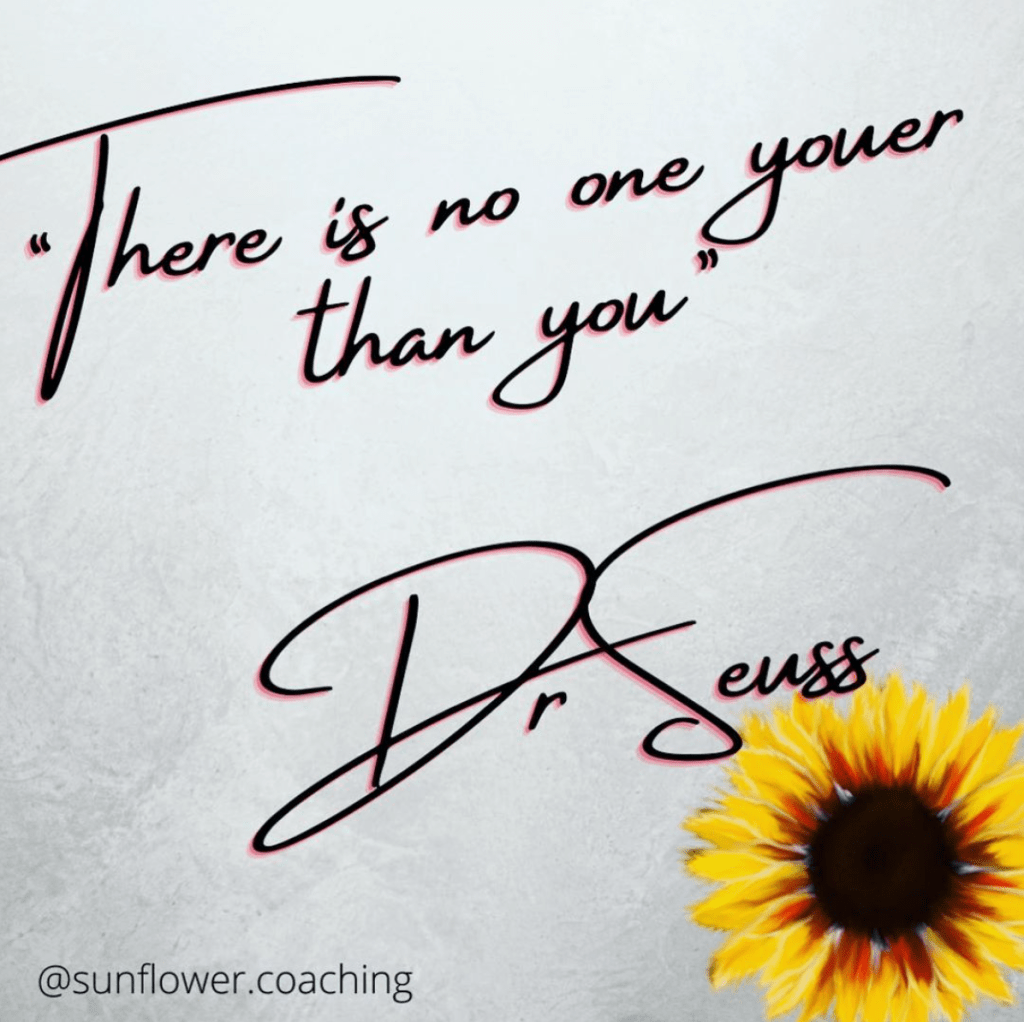
The key here is to recognise who you are. Everyone is different and it is in those differences we find our sense of self, and that is beautiful. In the words of Dr Seuss, “There is no one youer than you.” So whatever your goals are for this year, or for this week, make sure they are YOUR goals, designed for what YOU what and what YOU can do. And remember, not achieving something today, does not stop you from trying to achieve it tomorrow.

Happy new year to YOU!